Therese Brøndsted also produced a podcast aimed at the regular coffee drinker who is interested in learning more about coffee. The podcast is also about how to improve your taste sense. This is only in Danish.
When you roast the same bean on a regular basis and do the same roast profile – most of the time the taste turn out approximately the same. But sometimes it doesn’t anymore. That could be the beans getting older or changes in the environment.
In episode 13 in the podcast Coffee Roasting Navigated we talk about what to do when the taste change.
I interview Cristian Scigliano, barista and roaster at Andersen & Maillard in Copenhagen. And also talk to roasting consultant Michael de Renouard and roaster Kenneth Kastberg who build in pressure measurement in an old roaster.
Color change is a good way to follow the roast. It is more solid than bean temperature reading that is influenced by other things than what is going on inside the beans (see sensitivity to airflow).
It is difficult to make establish “Now it’s yellow” and note the time … or “now its the dark brown color where I dump the roast”. The color changes (CC) are gradual and the beans do not change evenly. You just have to find your own way of doing it. Like; when 80% of the beans are no longer green, I call it yellow.
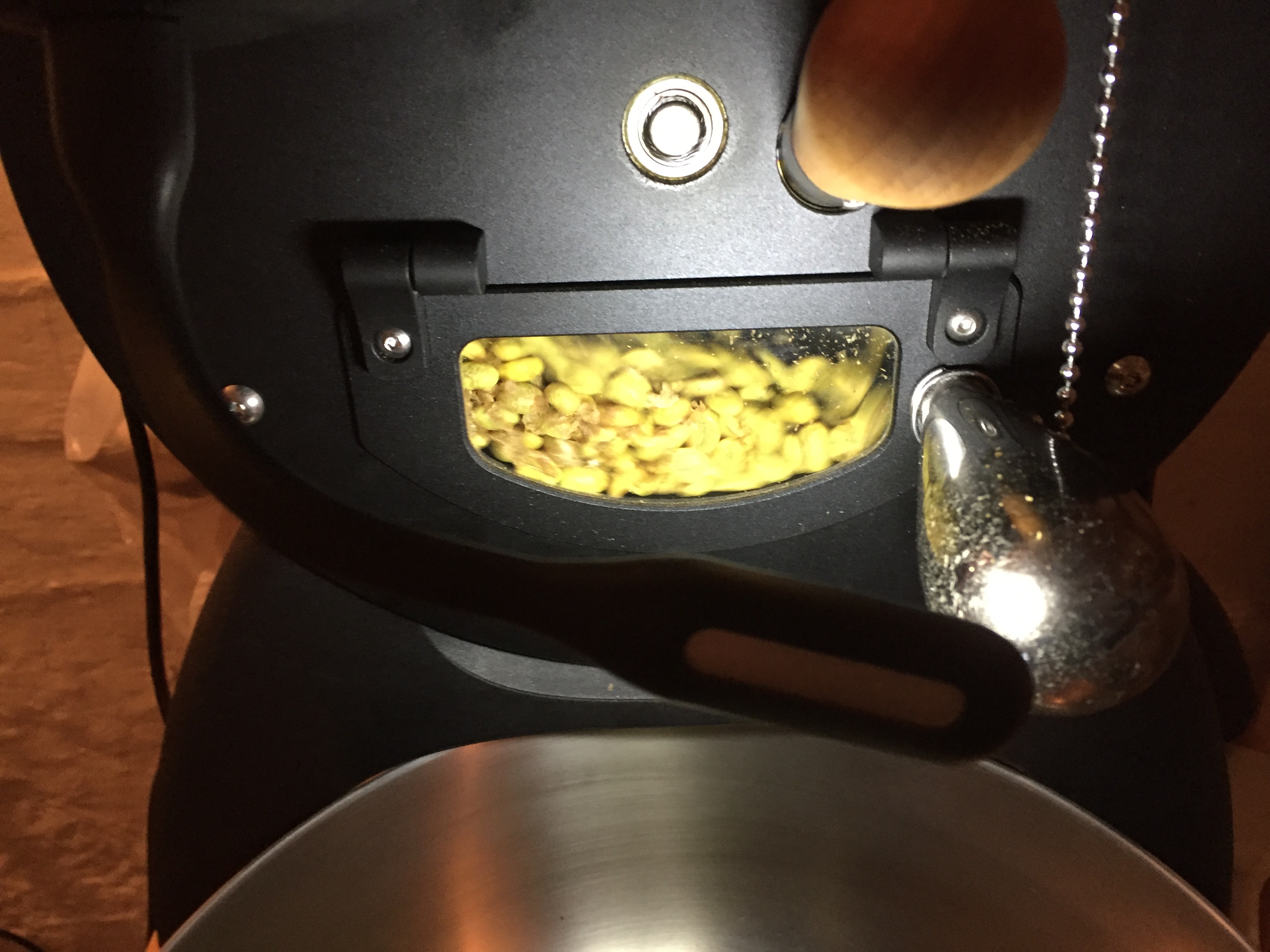
Also – what a color look like depends on the lighting.
Here I have two different lights on my roaster. The photos are taken 10 seconds apart. The first light gave a more yellow color – than the new ligth (the one with a a circle of light around a magnifying glass).
How do you decide when to stop the roast ? Once, I asked roaster Morten Riiskjær this question. He said by smell. The smell of onion has to be over before stopping.
He has been roasting coffee for 7 years. I visited him in the roastery to try to pick up what he could smell during a roast. He also looks at the bean surface.